
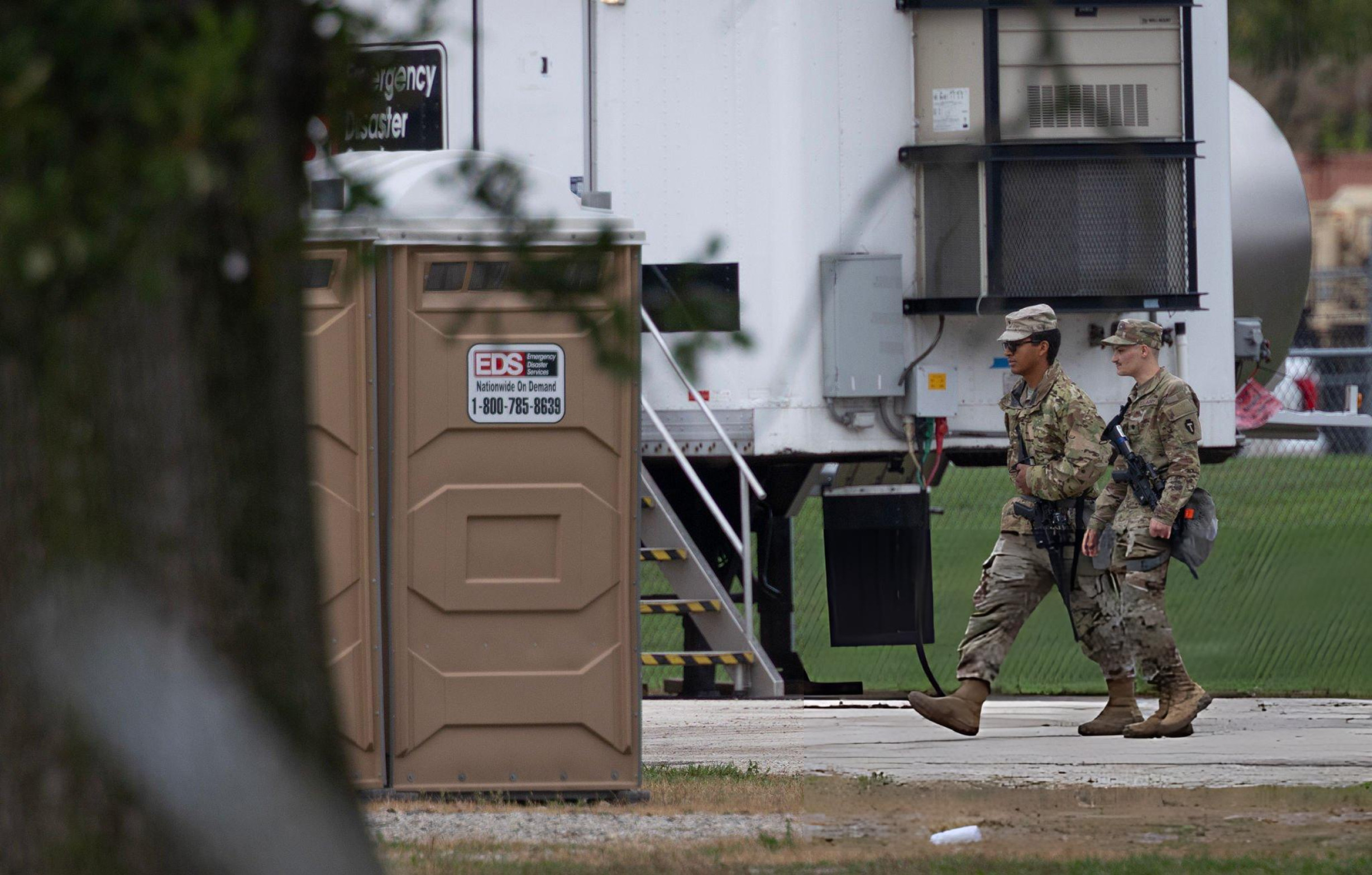
More than one million active-duty service members could miss their next paycheck on Oct. 31 unless Congress acts to end the government shutdown that has stretched into its fourth week.
Earlier this month, President Donald Trump redirected existing Defense Department funds to cover the Oct. 15 payroll, but officials say there may not be enough money left to do so again. The situation has become one of the most visible and damaging effects of the shutdown, as roughly 1.3 million troops continue reporting for duty without certainty they will be paid.
“The country asks so much of its service members. The very least we can do is pay them on time,” said Nancy Jacobson, co-founder of No Labels, a bipartisan political organization. “These are people who put their lives on hold and sometimes on the line so the rest of us don’t have to.”
Military families under strain
The shutdown’s impact extends far beyond furloughed federal workers in Washington. It is straining the economy, wasting taxpayer dollars and disrupting essential services such as food safety inspections and airport security. For military families, the consequences are immediate and personal.
Many troops already live paycheck to paycheck. Junior enlisted members earn less than $30,000 annually in base pay—less than half the U.S. median income of $62,700, according to the Defense Department. Financial stress, debt and food insecurity are growing concerns.
Roughly half of military families rely on a single income. Only 39 percent of service members’ spouses hold full-time jobs, while 17.5 percent work part-time. The remaining spouses are unemployed, making military paychecks their families’ sole source of income.
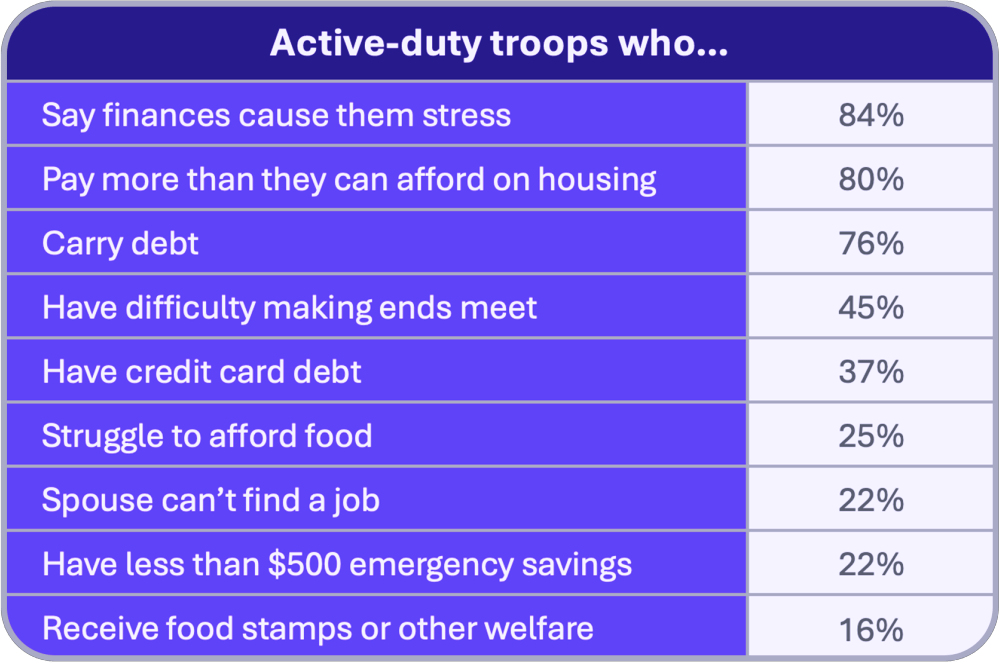
Frequent relocations make it harder for spouses to find steady work. Troops are reassigned every two and a half years on average, and nearly half of military spouses report significant difficulty finding jobs after a move. Families also spend up to $1,000 per relocation on expenses not covered by military stipends.
National security concerns
The shutdown is also undermining national security, as hundreds of thousands of civilian defense employees have been furloughed. About 45 percent of the Defense Department’s 740,000 civilian workers are off the job, along with 80 percent of staff at the National Nuclear Security Administration, which oversees the safety of the nation’s nuclear arsenal. This is the first time the agency has ever had to furlough employees.
Two-thirds of the Cybersecurity and Infrastructure Security Agency, responsible for protecting the nation’s critical systems from cyber and physical attacks, are also sidelined.
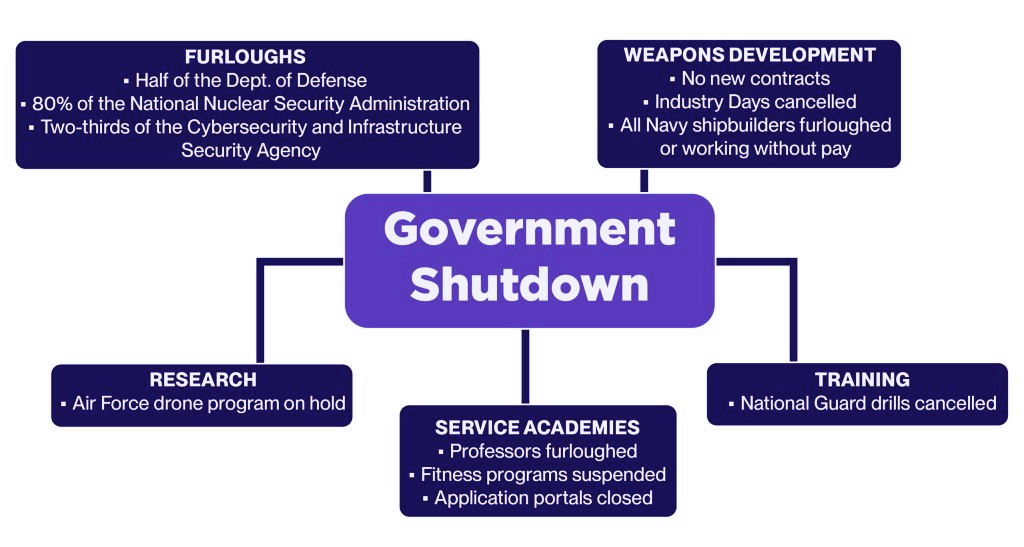
Across the military, operations are slowing or halted altogether. The National Guard has canceled most weekend training drills, affecting readiness for future deployments and disaster response.
At the Air Force Academy, 100 professors have been furloughed, fitness programs suspended and the admissions portal for prospective cadets temporarily closed.
Disruption to defense industry
The shutdown has disrupted key elements of the defense industrial base. The Air Force postponed the first test flight of its new Collaborative Combat Aircraft, an autonomous drone system expected to transform aerial warfare.
The Navy has canceled or delayed several “Industry Days,” which allow private contractors to prepare bids for major defense projects. Thousands of shipyard workers have been sent home or are working without pay, delaying shipbuilding and maintenance.
The Defense Department has warned of “little to no contract awards during the shutdown,” effectively freezing new weapons programs and maintenance projects. Analysts say this will increase costs and slow innovation in critical defense technologies.
A similar disruption occurred during the 2013 shutdown, when the Pentagon was forced to pause work on the F-35 fighter jet program. Experts warn that repeating such mistakes now could weaken the military’s readiness and erode the United States’ technological edge.
Every day the shutdown continues, defense officials say, it undermines the strength of the nation’s armed forces and the people who serve in them. “A strong military depends not just on those who wear the uniform,” Jacobson said, “but on leaders who keep their promises to them.”
